UNITI SWEDEN / LEWIS HORNE · FOUNDER & CEO
A small car.
An extraordinary undertaking.
From a Lund University project to a public multinational electric-car company. As founder and CEO, I brought together the capital, the people and the industrial partnerships to take Uniti onto the world stage.
01 / THE IDEA
Don’t electrify the past.
Design what comes next.
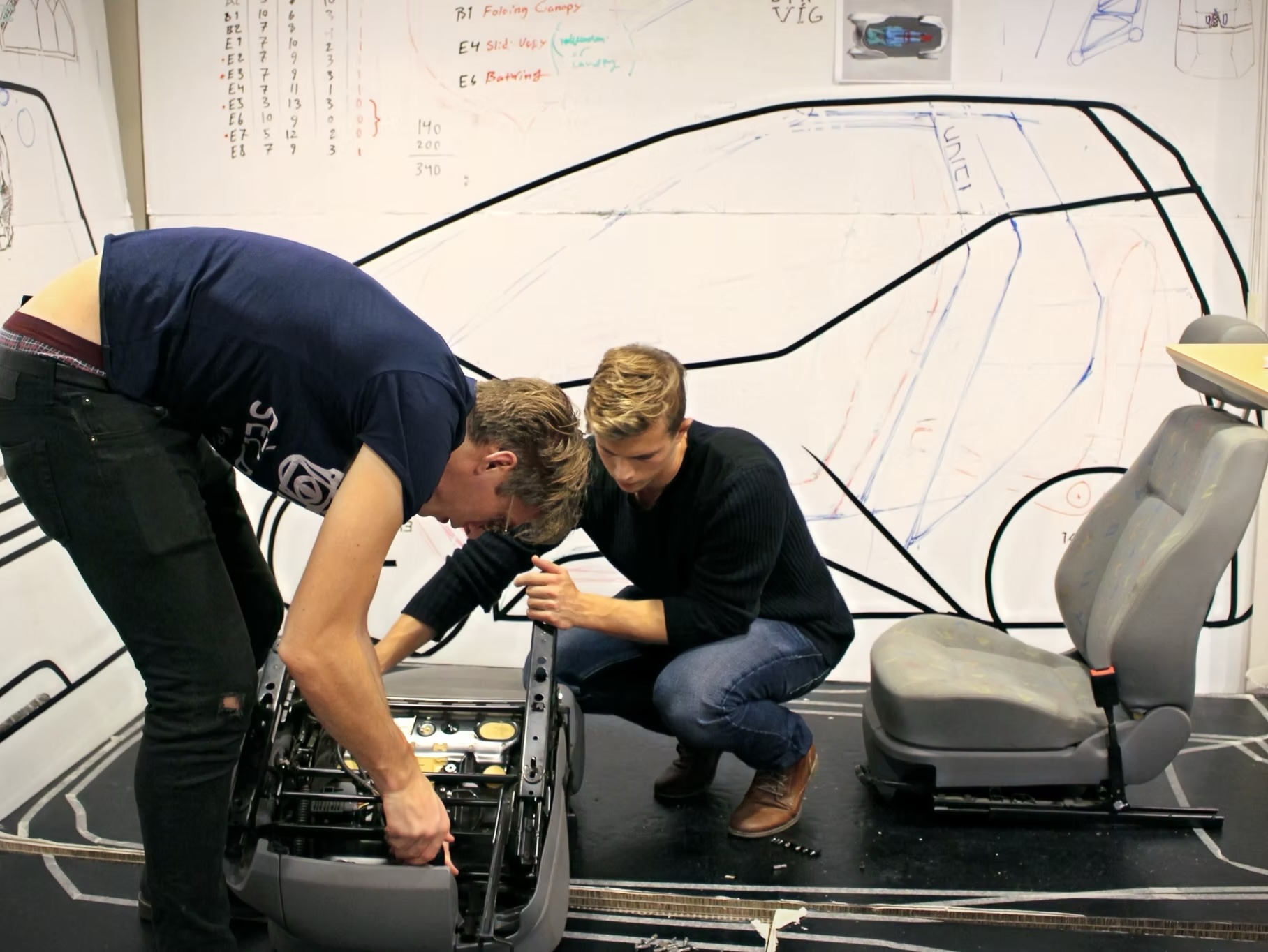
In 2015, deep inside Lund University, we asked a question: why were cars still so large, heavy and complicated when most city journeys needed so little of them?
Uniti began with a clean sheet. Lightweight, electric and digitally native—a vehicle conceived more like consumer electronics than a conventional car. We explored new controls, interfaces and construction methods, building tens of prototypes along the way. The work produced a portfolio of seven patent applications.
02 / BUILDING THE COMPANY
3,500 people backed
an audacious idea.
I raised roughly $7 million and built a community of 3,500 shareholders across 40 countries. More than 60 people rallied around the project in its first year. Engineers, designers and believers became an international team.
My remit stretched from fundraising and recruitment to product direction, industrial relationships and representing the company around the world. We were building the organisation and the vehicle at the same time.
03 / INDUSTRIAL COLLABORATION
Big ambition.
Serious company.
Siemens, KUKA, E.ON and NVIDIA became part of the Uniti story, spanning digital engineering, robotics, energy and vehicle technology. Uniti also joined NVIDIA’s Inception programme, with retail collaboration through MediaMarkt and UK development at Silverstone Park.
 Digital engineering
 Robotics
 Energy
 Technology · Inception programme
 Retail collaboration
04 / THE WORLD STAGE
Then the world
was watching.
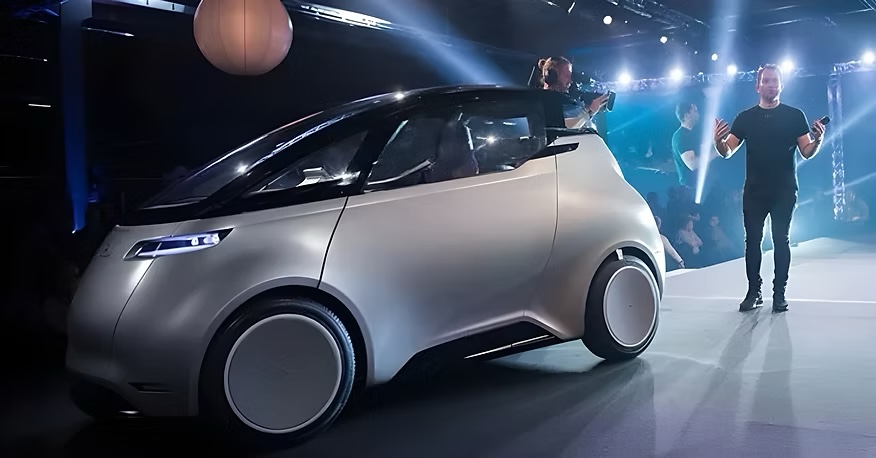
I presented on stages in 26 countries. In Berlin, Apple co-founder Steve Wozniak was in the audience. At our U17 reveal in Sweden, around 2,000 guests and more than 20 partners came together to see the Uniti One.
A car we had once drawn on a university wall was now under the lights. Investors, prospective customers and industry leaders were in the room. The engineering had become something people could see, touch and believe in.
Global potential media reach.
The idea travelled far beyond the workshop.
Potential audience of coverage—not a count of unique viewers.